
 Fondation braillard architectes
No products in the cart.
Calendar

The Challenge Of The Transition Project
05 Feb. 2026
09 - 11h
Geopolitics in the Age of the Anthropocene
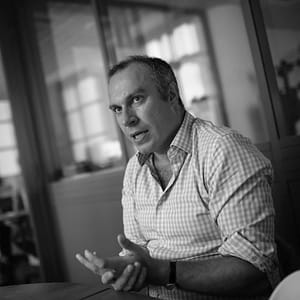
François Gemenne, Director of the Hugo Observatory at the University of Liège, lecturer at Sciences-Po and Sorbonne University
Bio Our entry into the Anthropocene, this new geological epoch which follows the Holocene, and in which humans are the main forces of change on the planet, requires a profound renewal of the social sciences, and geopolitics is primarily concerned by this revolution. It is now becoming impossible to distinguish between the Earth and the world, which would only be the political and social organization of the planet.For a long time, environmental issues were kept out of politics: the Earth was ruled by physical and biological laws, while the world was ruled by political and economic laws. This separation has notably led to the current ecological crisis, which has made many geologists say that we have now changed geological epochs. In the Anthropocene, the laws of nature overtook those of human history and geography.And this transformation of human relations with the Earth requires, in order to think about this new Earth, to invent a new geopolitics, or – to use an expression of Bruno Latour – a Gaïapolitics: literally, an Earth policy.
05 Feb. 2026
11 - 13h
Planetary Boundaries: What Lessons?
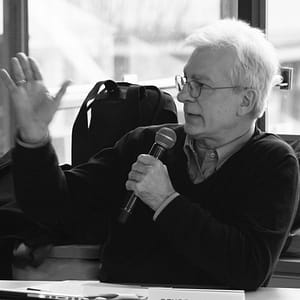
Dominique Bourg, Philosopher, Honorary Professor University of Lausanne (UNIL) - Member of the ECP scientific council
Bio The idea is to provide an overview of global challenges with three main entries: climate change, the collapse of biodiversity, especially arthropods, and a state of resources with some key benchmarks. We will also address the democratic, social and cultural context within which responses to the challenges must be constructed. We will then sketch out some possible solutions by focusing on three main axes: the economy with the idea of permacircularity, democratic institutions, and finally the cultural shift that is currently taking place.
05 Feb. 2026
14 - 16h
The Ecological Transition by Design. A brief Introduction

Panos Mantziaras, Director, Fondation Braillard Architectes
Bio In tribute to James Lovelock and Bruno Latour, this introduction to the 2025 season propses an articulation between environmental emergencies, the innovative potential of the design disciplines and the pathways towards the decarbonization and resilience of cities and regions in the short, medium and long term.
06 Feb. 2026
09 - 11h
Climate Change: towards a warmer world
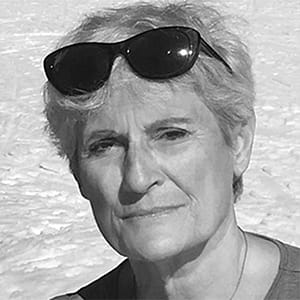
Marie-Antoinette Mélières, Physicienne climatologue
Bio05 Feb. 2026
16 - 18h
Ecology & the Greater Geneva
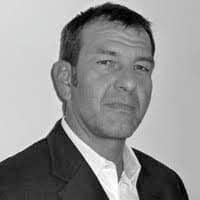
Sylvain Ferretti, Director General, Office of Urban Planning, Canton of Geneva
Bio06 Feb. 2026
11 - 13h
Ten Fundamentals of Systems Ecology Applied to Farming and Food Provisioning

Marjolein Visser, Professor at Université Libre de Bruxelles (ULB)
Bio Architects, urbanists, engineers and even landscape designers are trained to focus on building the places and spaces we live in, thus externalizing key aspects dealing with agriculture, ecology and food. So urbanisation typically ignores food needs and disables food growing. The first ambition of this workshop is to introduce a number of universal principles and concepts comings from systems ecology applied to agriculture and our agrarian past, present and future. While doing this, a wealth of further readings will be suggested to indeed further feed a food-enabling urbanism. The second ambition is to give practical hints for personal and collective regrounding toward genuine “food care” overall. Taken together, these elements should unlock fresh pathways to tackle our common 21st century challenges, through the prism of food.
06 Feb. 2026
14 - 16h
Hydrological Transitions for Mountain Metropolises
Carmen De Jong, Professor of hydrology, University of Strasbourg
Bio Water resources are essential for humanity. Today, major challenges concerning water resources include the identification of the spatial and temporal dynamics of water availability and how these are impacted by climate change and anthropogenic pressure. The vulnerability and resilience of water resources depend on their geographic context, from mountains to plains, across arid to humid climates, and the extent of impact from water abstraction. The course covers these general themes and concludes with a special focus on the Greater Geneva Region. This will include the role of water supply from Lake Geneva and its surrounding glaciers, the impacts of climate change such as severe glacier retreat, heatwaves, and droughts, as well as groundwater lowering. The course ends with perspectives on responsible water management.
06 Feb. 2026
16 - 18h
Urban Soil: Inert Surface or Living Resource?
Elena Havlicek, Doctor of Ecology and Soil Science
Bio Soil is a functional interface of all terrestrial environments, whether natural, agricultural, or urban. To understand soil, its role, and its functions, it is essential to place it within the broader functioning of ecosystems. The first part will focus on the principles of ecosystem functioning, soil formation, and the properties that determine how humans use them.Urban soils are often degraded, contaminated, and scarce in cities. The second part will explore their crucial role in water and climate regulation, as well as potential strategies for their rehabilitation.Urban Soils: (Part of) the Solution for Sustainable Cities?
07 Feb. 2026
09 - 13h
Coordination session #1 Geneva 2050
Gwenaëlle Zunino, Research fellow, School of architecture of Nancy
Bio Panos Mantziaras, Director, Fondation Braillard Architectes
Bio Review session of the introductory part of the Theory Masterclass and visit to the neighborhood selected for the Design Studio.
Parameters & Dimensions
05 Mar. 2026
09 - 11h
Metrics for the ecological transition
Panos Mantziaras, Director, Fondation Braillard Architectes
Bio Why do we need to measure the progress of the ecological transition? How has the climate and its warming led us to establish a whole new generation of impact metrics and – even more importantly – of accountability metrics in these areas? In what crucial ways does decarbonization differ from resilience when we get to measure them? These questions will be addressed through a brief recourse to history, physics, chemistry, biology, but also to economics, the sociology of actors and, last but not least, design and planning. The objective is to arm participants with cross-knowledge tools, to help them build their own lines of reasoning for their future practice as transition strategists.
05 Mar. 2026
11 - 13h
Four Escape Routes from Modernism
Dirk Sijmons, Landscape architect, founder of H+N+S Landscape Architects
BioMobilis in Mobile is a lecture about the question how we find guiding principles for policy and design with the wicked environmental problems of the Anthropocene. Four different worldviews, and the way they influence the perspectives for action. Next to these worldview the lecture also deals with the professional niches we could choose. Combining these two formative elements offers at least sixteen different positions a reflective practitioner could use to confront the challenges of the Age of Mankind.
05 Mar. 2026
14 - 16h
Regional Planning, Physiographic Determinism: The Spatial Design as Human Ecology?
Catherine Maumi, Professor of Architectural History and Cultures ENSA Paris-La Villette
BioThis course will revisit the ideas put forward throughout the 20th century by various Anglo-Saxon personalities—including forestry engineers, urban planners, and landscape architects—who were concerned with the medium- and long-term consequences of human action on the environment. Rooted in an intellectual lineage dating back to the 19th century (Thoreau, Marsh), these thinkers sought to explore and experiment with design methodologies that embraced a different relationship with nature and a mode of human settlement more respectful of resources, ecosystems, landscapes, and human beings.
Set apart from debates and initiatives focused on strengthening nature conservation, these ideas remain particularly relevant because they aim to establish the foundations of a science of human settlements on Earth—one that prioritises the preservation of its fundamental balances.
05 Mar. 2026
16 - 18h
Architecture, History and Decarbonisation
Daniel Barber, Historien de l'architecture
Bio06 Mar. 2026
09 - 11h
From Ecosystem Services to Sustainable Development
Anthony Lehmann, Associate professor, Institute for Environmental Sciences – University of Geneva
Bio In this course, we explore the evolution of the concept of Ecosystem Services highlighted in the 2005 UN report entitled “Millennium Ecosystem Assessment” which led to the creation of the Intergovernmental Platform on Biodiversity and Ecosystem Services (IPBES) ten years later. We will analyse the data and tools used to quantify and map these services, and we will examine the limitations of this approach when addressing Sustainable Development Goals (SDGs). This reflection will lead us to the concept of the Nexus formed by the different SDGs and their dependence on services provided by nature.
06 Mar. 2026
11 - 13h
Practical Advice for Incorporating Biodiversity and Climate into Projects and Plans
Martin Schlaepfer, Senior Lecturer, Institute for Environmental Sciences, University of Geneva
Bio In this lecture we will cover different approaches to ensuring that biodiversity and climate related concerns are integrated into projects and plans. First, we will discuss theoretical notions such as negative externalities and telescoping that are particularly relevant in developed cities such as Geneva. Then, we will cover different visions of sustainability, existing targets (for both climate and biodiversity), possible pathways to reach these targets, and indicators that measure progress. Finally, we look at existing tools that can mainstream biodiversity and ecosystem services.
06 Mar. 2026
14 - 16h
Satellite observation and cartography of climate change
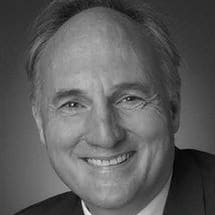
Peter Droege, Urban Designer, Urban Sustainability Expert - Director of the Liechtenstein Institute for Strategic Development
Bio06 Mar. 2026
16 - 18h
Living in the Era of Persistent Overshoot : What Will Gain in Value ?
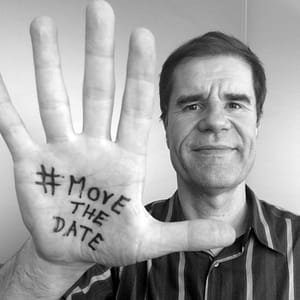
Mathis Wackernagel, Founder & President of Global Footprint Network – ECP scientific council member
Bio Our economies are doing Bernie Madoff pyramid schemes with the planet (we are taking the resources of the future to pay for the present). As a result, humanity’s demand on nature today exceeds what Earth can replenish, eroding our natural capital and jeopardizing future regeneration of resources. Like any such system, this one, if not followed, can only lead to collapse. Such a catastrophe would destroy much of the progress of mankind.
07 Mar. 2026
09 - 13h
Coordination session #2
Panos Mantziaras, Director, Fondation Braillard Architectes
Bio Gwenaëlle Zunino, Research fellow, School of architecture of Nancy
Bio Review session for the second part of the Theory Masterclass
The Human Factor
23 Apr. 2026
09 - 11h
The Second Fall from Paradise. Philosophical Considerations on the Ecological Transition between Consciousness and Action
Panos Mantziaras, Director, Fondation Braillard Architectes
Bio As the world enters a political and economic whirlwind that is diverting humanity from the trajectory of decarbonization and resilience, it is important to return to a body of essential references to find the direction of our actions. Consolidated in the long human experience by narratives as much mythological and spiritual as scientific and technical, this body of work reconstitutes an essential philosophical reference point for navigating with hope and determination towards the horizon of ecological transition.
23 Apr. 2026
11 - 13h
Behavioral Perspectives for Sustainable Action: Psychological Barriers and Levers
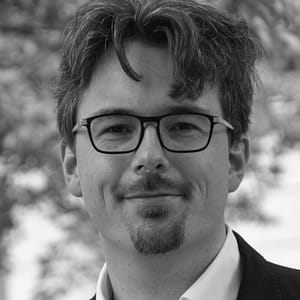
Tobias Brosch, Associate Professor – Consumer Decision and Sustainable Behavior Lab – University of Geneva
Bio Developing a more sustainable way of life is one of the most urgent tasks facing our planet and its inhabitants. While the majority of people are now aware of such issues, such as climate change or biodiversity loss, too little is being done to translate this knowledge into concrete and sustainable action. To promote the necessary behavior changes, research is studying the determinants of sustainable behavior, and policymakers have started to apply behavioral knowledge to develop new intervention strategies. In this presentation, we will discuss the most recent psychological knowledge about the factors that can motivate people to take sustainable actions or that can hinder those actions. Different intervention strategies aimed at promoting sustainable action, such as information provision, motivational approaches and “nudges” will be presented and discussed.
23 Apr. 2026
14 - 16h
An integrative perspective on the energy transition
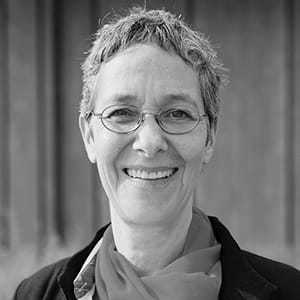
Claudia R. Binder, Professor for Human-Environment Relations in Urban Systems – EPFL ENAC
BioThe current climate, energy and societal crises have shown that we need new tools for designing measures and strategies for achieving a more sustainable future. At the core of addressing these challenges lies the energy transition. Scholars have found that the transition towards a low-carbon energy regime requires not only the development of new energy technologies but also deep-structural changes in society: these concern radical, systemic shifts in values and beliefs, in patterns of social behavior, and in governance regimes. Recently the term of Social Tipping Points (STPs) has been coined as being crucial to design policies that push societies towards sustainable transition pathways and support urgent climate action. STPs are defined as “non-linear processes of transformative change in social systems”. After surpassing a certain threshold, both the structure and the dynamics of the system change, and strongly reinforcing feedback emerge which can amplify a small change, leading to a new state of limited reversibility. We will provide systemic understanding of transition pathways and invite on the reflection of STPs.
Claudia R. Binder, EPFL
In collaboration with:
Jair Campfens, Dr. Mert Duygan, Dr. Maria Anna Hecher, and Dr. Gloria Serra-Coch
23 Apr. 2026
16 - 18h
A long-term perspective on planning and transition
Michèle Tranda-Pittion, Doctor in architecture and urban planing, University of Geneva
BioThis session examines spatial planning in Geneva from both a historical and forward-looking perspective. Drawing on the canton’s major strategic visions since the 19th century and the specific case of the La Chapelle site, it explores the tools and data required to design an urban project that incorporates the challenges of the ecological transition.
24 Apr. 2026
09 - 11h
Transitions: what to do with mobility in architecture?
Vincent Kaufmann, Professor of urban sociology and mobility analysis
Bio Whilst most cities rely solely on technological innovation to decarbonise transport, meeting the Paris Agreement targets requires simultaneous action on modal shift and the reduction of motorised travel. This session examines the political and social barriers to this transition, particularly the inequalities that certain measures may create, and explores how spatial planning can create the conditions for a way of life that is less dependent on motorised transport.
23 Apr. 2026
11 - 13h
Environmental and Climate Law: realities and perspectives

Lena Nussbaumer-Laghzaoui, Lawyer, specialising in environmental law
Bio In the face of the climate emergency, Swiss environmental law has become an essential – and sometimes restrictive – framework for any construction project. This presentation explores the sources and fundamental principles of Swiss environmental and climate law, with a focus on the built environment. It covers the main areas of environmental law and is structured around concrete examples and practical cases designed to highlight the challenges and tensions that certain construction projects can raise: how can we reconcile densification, regeneration and environmental requirements? Where do the limits of the law lie in the face of the imperatives of the ecological transition?
24 Apr. 2026
14 - 16h
Methods and measures for building decarbonisation

Sanne van der Burgh, Head of MVRDV NEXT
Bio Drawing on her expertise in climate research, development and innovation at MVRDV, Sanne van der Burgh explores in this session the practical methods and tools for decarbonising the construction sector. Using computational approaches and data-driven methodologies, she examines how to integrate climate imperatives from the earliest stages of architectural and urban projects — from measuring emissions to implementing low-carbon strategies at both building and regional levels.
24 Apr. 2026
16 - 18h
Design in the Age of Emergency
Duncan Baker-Brown, Architect, Founder at BakerBrown – School of Architecture and Design – University of Brighton
Bio25 Apr. 2026
09 - 13h
Coordination session #3 Decarbonization and Resilience Fresk
Gwenaëlle Zunino, Research fellow, School of architecture of Nancy
Bio Panos Mantziaras, Director, Fondation Braillard Architectes
Bio Part 1 : the Decarbonisation and Resilience Fresk, Part 2 : Practical session on the structure of the presentation and the flow of arguments.
The Building Factor
28 May. 2026
09 - 13h
International Consultation: Geneva
Greater Geneva Consultation Teams, AWP, Boeri Architetti, Apaar, Viganò Studio
Bio Special round-table discussion on the seven projects and visions proposed during the International Consultation on Greater Geneva. Presentations and discussions with some of the teams. Speakers: Marc Armengaud Oscar Buson Nathalie Mongé Paola Vigano
28 May. 2026
14 - 18h
International Consultation: Luxembourg in transition
Greater Luxembourg Consultation Teams, 2001 Luxembourg, AREP, University of Luxembourg
Bio Special roundtable discussion on the projects and visions proposed during the International Consultation on Greater Luxembourg.Presentations and discussions with some of the finalist teams.
Speakers:
MVRDV (Chun Hoi Hui , Ute schneider and Kees Christiaanse)
2001 (Philippe Nathan )
AREP (Gregoire Robida)
29 May. 2026
09 - 11h
Transformations in European cities: the case of IBA in Germany

Johannes Novy, Urbanist, researcher and educator
Bio This presentation explores the Internationale Bauausstellungen (IBA) in Germany as platforms for urban, architectural and spatial experimentation, with a particular focus on the IBA’27 StadtRegion Stuttgart.Using this example, to which Johannes Novy contributes as a member of the Kuratorium, the presentation will explore how the IBAs support the transformation of cities and regions facing social, economic, environmental and industrial challenges.It will highlight the specific features of this German model: long-term vision, partnership-based governance, architectural innovation, regeneration of brownfield sites, the productive city and the ability to foster demonstration projects.Building on these experiences, the presentation will open up a discussion on what the IBAs can offer other European contexts in terms of urban transition, strategic planning and practical implementation.
29 May. 2026
11 - 13h

Sisse Canguilhem, Executive Vice-President of the Danish Sustainable Building Council
Bio29 May. 2026
14 - 16h
Bioclimatic architectures
Guillaume de Morsier, Architect, urban planner, co-founder of Kunik de Morsier architectes, Lausanne (CH) and teacher at ENSA Marseille (FR)
Bio29 May. 2026
16 - 18h
Architecture and the ecological transition in French-speaking Switzerland
FAZ Architects, Henri Mardi Architects and Kunik de Morsier Architects Teams,
BioThe aim of this round-table discussion is to offer participants in the Transition Workshop an approach grounded in practical experience and the realities of project feasibility. The aim is to encourage participants in the Transition Workshop to take action.The main theme of this open discussion between professionals and participants of the Transition Workshop is: How do we go about designing and implementing a low-carbon and resilient project?
A discussion between Véronique Favre (FAZ Architects), Zeno Cattani (Henri Mardi Architects) and Guillaume de Morsier (Kunik de Morsier Architects)30 May. 2026
09 - 13h
Coordination session #4
Gwenaëlle Zunino, Research fellow, School of architecture of Nancy
Bio Panos Mantziaras, Director, Fondation Braillard Architectes
BioProject linked to the Design Studio site Part 1: Lecture by Panos Mantziaras: Permanent retrofitting (9am–10am) Part 2: Departure for the site to put the lecture into practice (10.15am–1pm)